
Manufacturing Excellence for Die Cutting and Flexible Material Converting
JBC Technologies is a vertically integrated, full-service U.S.-based flexible materials converter specializing in precision die-cut components for medical, aerospace, automotive, and industrial manufacturers. With over 150,000 square feet of domestic manufacturing space, JBC offers clean room processing, inline visual inspection, and multiple quality certifications — backed by a structured Continuous Improvement framework and advanced converting technology that OEMs and tier suppliers depend on for precision, compliance, and supply chain reliability.
What Does Manufacturing Excellence look like at JBC Technologies?

At JBC Technologies, Manufacturing Excellence is not a marketing slogan. It is a measurable state of high yield, regulatory compliance, and process stability... and it spans the full production lifecycle. There are a million different ways to provide die cut parts – our job is to identify the best, most cost-effective one for your applications..
- We offer next-level die-cutting services that focus on finding the best solution for your gaskets, seals, heat shields, and other die cut parts.
- Our defect prevention strategy combines real-time inline vision systems and Statistical Process Control (SPC) to catch errors at the source, supported by rigorous dimensional reporting and PPAP compliance for long-term process stability, and
- Our Continuous Improvement culture actively engages operators in structured problem-solving — raising the standard of work at every level of the organization to deliver custom solutions that help reduce waste, improve throughput, and save money for our customers.
JBC Technologies' manufacturing environment is purpose-built to exceed expectations through a combination of...

- Die cutting
- Dieless cutting
- Digital inline printing
- Embossing and microperforating
- Laminating
- Sheeting
- Slitting
- Surface treating
- Ultrasonic welding

- Multiple ISO Class 8 cleanrooms maintained in accordance with ISO 14644 airborne particle classification requirements
- Defined clean manufacturing areas with controlled environmental conditions to mitigate contamination risk where ISO classification is not required
- Daily environmental monitoring and documented controls
- Strict Operations Control Program (OCP)

- Automated Assembly System Design
- Die Design
- Design for Manufacturability (DFMA) Recommendations
- Production Process Design to Maximize Yield and Throughput
- Prototyping Support
- Material Recommendations
- Value Analysis/Value Engineering (VA/VE)

- ISO 9001:2015
- ISO 13485
- FDA Registered
- DDTC Registered
- ITAR Compliant
- cGMP Compliant

Defect prevention and process control for reliable, repeatable results
- Real-Time Prevention (Inline Vision)
- Active Process Control (SPC)
- Measurement Integrity (Gauge R&R)
- Post-Process Validation (Dimensional Reporting & PPAP)
- Lot Traceability

Continuous Improvement framework for sustained operational excellence
- Gemba Walks
- Manning Strategy ( RCCP, SIOP, Training)
- Process Checks
- Daily accountability through tiered meetings and metrics
- Process standardization
- Visual controls
- Leader standard work
Ask an Engineer: Answers to Frequently Asked Manufacturing, Die-Cutting, and Quality Questions
Statistical process control (SPC) is driven by customer requirements, the control plan, and the complexity or risk of the part. JBC has the capability to apply appropriate SPC methods to monitor and maintain a stable, repeatable process. We do in‑process dimensional monitoring with calibrated measurement equipment and capability studies most often (Cp/Cpk), but we can also implement control charts to track critical characteristics (ctq) throughout production.
All parts go through the New Product Launch (NPL) process. During this process, our NPL, Engineering, and Quality teams translate customer requirements into clear, complete, and controlled instructions for production. Only this group has the authority to create or approve these documents to ensure accuracy and control. We ensure repeatability through controlled job instructions, first‑run oversight, and in‑process quality checks at critical steps. QC checks include ensuring correct material is used, dimensions and critical characteristics are within specification, and no variation that could impact fit, form, or function. These checks are performed by trained personnel using calibrated measurement equipment. All tools used to verify your parts are calibrated to NIST‑traceable standards to ensure accuracy and repeatability of every measurement we take. Operators, inspectors, and support teams are trained and qualified to perform their assigned tasks, reducing variation and ensuring your part is produced consistently across shifts, machines, or operators.
At JBC Technologies, we inspect quality at multiple points throughout the entire manufacturing process. These checkpoints include receiving inspection to verify incoming material meets required specifications before it is released to production.
Start‑Up / Setup Verification - to confirm the process is producing parts that meet all requirements before the run continues.
In‑Process - We perform dimensional and visual checks during production at defined intervals. The frequency depends on part criticality, customer requirements, and process risk and complexity. For some parts, this means hourly checks; for others, it may be more frequent.
Final Inspection - Performed before release to ensure finished goods fully meet specifications and are fit for use.
JBC Technologies completes Production Part Approval Processes (PPAPs) in accordance with customer requirements and follows the AIAG standards. We can provide any requested PPAP level, with Level III PPAPs being the most commonly completed. Our PPAP documentation typically includes the following elements:
-
Dimensional layout for all print characteristics
-
Material certifications and compliance documentation
-
Process Flow Diagram, PFMEA (Process Failure Mode and Effects Analysis), and Control Plan
-
Initial process capability studies
-
Appearance approval
-
Sample parts
-
Part Submission Warrant (PSW)
A Gage Repeatability and Reproducibility (GR&R) Study is an essential process used to confirm that the measurement system itself is reliable. This type of study assesses both the consistency of measurement results when repeated by the same operator (repeatability) and the variability between different operators (reproducibility).
At JBC Technologies, we conduct GR&R studies in several situations, including when a new gage is introduced, when we add a new inspection method, to support Production Part Approval Process (PPAP) or customer validation, or when reviewing gage performance for parts with tight tolerances. These studies ensure that our measurement equipment provides accurate and consistent results, which is critical for maintaining quality standards.
A typical GR&R test involves 2 to 3 operators measuring 10 different parts, with each operator measuring each part at least 2 to 3 times. The data collected is then analyzed to determine if the variation in measurements is acceptable based on the specified tolerance for the part. If the measurement variation is within acceptable limits, the system is considered reliable for use in quality verification processes.
Through upfront engineering collaboration during quoting, dedicated R&D for major programs, and tooling designed specifically for optimal nesting and minimal scrap. We monitor first‑run production to confirm actual yield matches expectations, negotiate material MOQs with suppliers to align with your required volumes, review material variance and scrap data regularly, and apply lessons learned from similar projects to continually reduce waste and keep your overall costs down.
JBC operates a Clean Manufacturing Area designed to reduce contamination and risk for products with defined cleanliness requirements. Within this controlled environment, JBC also operates ISO Class 8 Cleanrooms for applications requiring stricter particulate control.
We review customer requirements to determine the appropriate manufacturing route, ensuring that each project is processed in an environment that aligns with its cleanliness, regulatory, and application needs.
Both the Clean Manufacturing Area and the ISO Class 8 cleanrooms follow strict operational guidelines designed to prevent contamination. These controls address personal practices, material flow, cleaning protocols, and environmental conditions. Controlled areas are monitored daily to verify compliance with internal procedures and cleanliness standards, supporting consistent performance and risk mitigation.
The Operations Control Program is the framework of procedures and controls used to maintain required cleanliness levels in cleanrooms and clean manufacturing spaces during normal operations, reduced activity, shutdown, and startup conditions.
Advanced Converting Processes We Support
Enabling complex designs, reliable assembly, and predictable performance.
Our advanced converting processes enable precise control over bonding, cutting, and material placement—supporting complex part geometries and assembly‑ready designs. The result is improved manufacturability and throughput, optimized value, and consistent quality.
What |
How |
Why |
|---|---|---|
Surface Energy Management |
JBC Technologies manages surface energy by using specialized processes such as Corona or Plasma treating. |
Some materials don’t like to stick to others — particularly when one of them has low surface energy. Corona and Plasma treating can be used to change the surface energy of one material to improve bonding. |
Zone Coating |
JBC engineers the adhesive pattern during lamination—using patterned coating, masked transfer adhesives, or precision registration of pre‑coated materials. |
Zone coating is used to apply adhesive only where functionally required, enabling features such as islands, pull tabs, controlled peel zones, and clean handling while reducing adhesive waste and application risk. |
Island Placement |
JBC performs Island placement (a complex, multi-layer lamination) using specialized converting processes to precisely control the adhesive application or transfer. This approach ensures that the adhesive pattern is precisely aligned with the die-cut geometry, resulting in intentional adhesive-free zones within the finished part. |
In certain products or parts (a Band-Aid is one example, even non-technical people can relate to), specific materials must be placed only where they are functionally required, or the product will fail to perform correctly. |
Multi-Depth Cutting |
Multi-depth cutting is done by engineering-controlled cut depths across the die using precision die heights, shims, or segmented tooling. This is combined with tight registration and process control, so each layer is cut as intended (kiss‑cut, partial cut, or through‑cut) in a single pass. |
Multi‑depth cutting is used to selectively cut different layers within a material stack‑up—such as face stock, adhesive, and liner—to enable features like pull tabs, islands, extended liners, or staged release without compromising part integrity. |
Kiss Cutting |
Kiss cutting is done by precisely controlling die depth and pressure, so the material is cut cleanly while the release liner remains intact. |
By keeping the liner intact, kiss cutting delivers organized, protected parts on a roll that support features like finger-lift tabs for faster manual peeling and seamless integration into high-speed automated assembly. |
Extended Liners |
At JBC, when we refer to extended liners we are referring to the process of kiss-cutting the adhesive layer to the desired part geometry and stripping away the "matrix" (waste adhesive), while leaving the underlying liner intact and oversized. |
The key benefit is efficient high-speed assembly: it creates a non-adhesive "finger-lift" tab that allows operators to quickly peel and place parts without contaminating the adhesive or struggling to catch a flush edge. |
Split Back Liners |
We create split back liners by laminating a release liner that is pre‑slit or selectively slit inline, then registering the split precisely to the die‑cut geometry, so each liner section peels cleanly without disturbing the part. |
Split-back liners are designed to facilitate a "crack-and-peel" application process. This approach allows users to anchor large or complex parts with precision, as the backing can be removed in controlled stages. By enabling partial removal of the liner, split-back liners help position components accurately before fully exposing the adhesive, supporting precise placement and reducing risks associated with misalignment. |
Kitted Parts on a Sheet |
Kitting multiple parts on a sheet leverages many of the techniques discussed above, including multi-depth cutting and kiss cutting. It also includes nesting multiple die‑cut components onto a common liner or carrier sheet with controlled spacing and registration |
Kitted parts on a sheet are used to simplify handling, sequencing, and assembly by delivering multiple related components in a single, organized presentation, reducing touch time, errors, and application variability. |
Slug Management |
There are quite a few different ways that JBC manages slug removal – from vacuum systems to pusher pin dies to high density foam inserts in the tooling. |
The slug is essentially the “donut hole” a.k.a. The part that went to waste until someone saw a market for undersized donuts. In die cutting the market for waste is small, so slug management enables JBC to deliver parts to print, with any excess “slugs” or center holes removed. |
Pull Tabs |
Pull tabs are created during the converting process by selectively extending the cut geometry beyond the functional area of the part or by controlling adhesive coverage, so the tab remains non‑adhesive. |
Pull tabs are designed to make a die‑cut part easy to grasp, peel, or remove—most commonly from a liner, backing, or release surface. They provide a dedicated grasp point that eliminates handling damage and adhesive contamination, significantly increasing application speed and part reliability. |
How JBC's Manufacturing Capabilities Solve Industry-Specific Challenges Converting Solutions for Specialized Markets
Aerospace & Satellite

Capabilities
Void-free lamination of micro-channel adhesives, vertically integrated converting for components of diverse complexity, size, and volume, and DFM/consultative engineering support for mission-critical reliability in aerospace and satellite applications.
Products
Reflective and protective films, solar array insulators, flexible electrical interconnects, heat-spreading gaskets, thermal gap fillers, vibration-dampening mounts, conductive grounding strips, and environmental seals.
Learn more about our aerospace and satellite market solutions
Automotive

Capabilities
High-speed rotary die-cutting for complex, high-volume automotive components with minimal material waste, wide-format cutting for heat shields and large-format parts, automated multi-part assembly, and VA/VE process optimization for improved yield and supply chain efficiency.
Products
Interior and exterior attachment tapes, gaskets, cushions, seals, and spacers, heat shields, EV battery cushions, cell separators, and more.
Consumer Wearable Patches

Capabilities
High-speed cleanroom rotary die-cutting, on-part printing for branding and use instructions, clean-environment pouching and retail-ready packaging, and DFM services to bridge the gap between product concepts and cost-effective mass production.
Products
Mouth tapes, nasal strips, fashion tapes, breast lift tapes, nipple covers, face tapes, Continuous Glucose Monitor (CGM) overlay patches
Medical
Capabilities
ISO Class 8 cleanroom production, ISO 10993-compliant biocompatible adhesive sourcing and conversion, and high-accuracy island placement for precise multi-layer registration and consistent performance in medical device applications.
Products
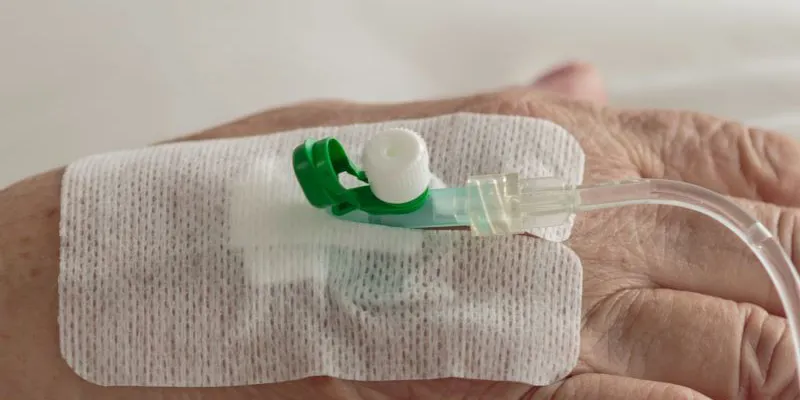
FDA Class I products and Class II non-invasive components, including pulse oximetry tapes, electrode patches, IV dressings, island dressings, Holter monitor patches, wound dressing cover tapes, and gaskets, seals, and attachment tapes for durable medical equipment (DME).
Energy Storage Solutions (ESS)

Capabilities
Vertically integrated converting capabilities supporting small- to large-format battery and energy storage components, with tight-tolerance, multi-layer, high-speed rotary, and dieless precision cutting. Backed by engineering-to-engineering DFM collaboration, VA/VE-driven cost optimization, and full lot traceability. Deep expertise converting thermal management and electrical insulation materials for battery and energy storage applications.
Products
Thermal barriers and insulation materials, electrically insulating films and papers, compression pads, seals, gaskets, spacers, cell separators, cushioning components, and filtration and protective material solutions for battery packs and energy storage systems.
Industrial

Capabilities
Vertically integrated manufacturing, including multi-layer laminates and multiple cutting technologies — rotary, flatbed, and dieless — for scalable capacity that supports prototype through production continuity. Additional capabilities serving high-volume industrial manufacturers include automated assembly, vendor-managed inventory (VMI), consignment programs, and broader supply chain solutions.
Products
Seals, gaskets, heat shields, acoustic insulation panels, thermal acoustical barriers
JBC: Built for Innovative Die Cutting Services
With a culture of innovation in place, our goal is to continuously improve our manufacturing process to provide the best value possible for our customers. We’ve invested in state-of-the-art equipment to create a vertically-integrated business model that allows us to handle multiple capabilities in house.
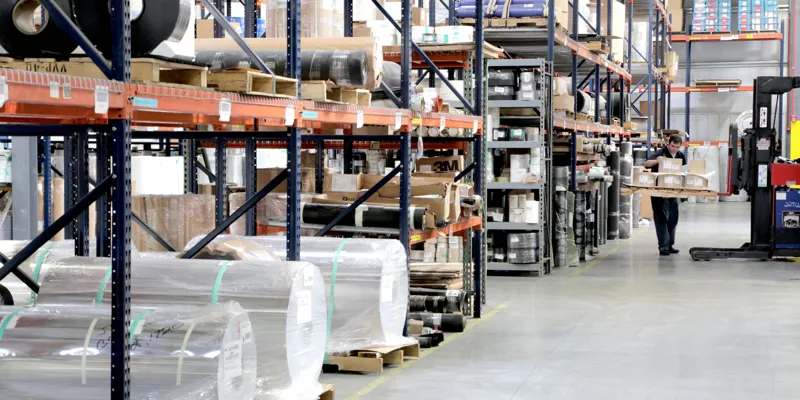
Our vertical integration allows you to work with a single supplier that can produce everything from prototypes to large volume runs. Since we can transform materials from mill rolls to finished parts onsite, we can help you keep costs down and eliminate supply chain risks.
With our vertical integration, Fortune 100-level quality systems and processes, and quality certifications, we can ensure manufacturing excellence for all your precision die-cutting and materials conversion needs.
Submit your project today to have us manufacture your parts.
Read More
Supply Chain Optimization

JBC eliminates costly waste, improves turn times, and reduces inventory through a series of processes and capabilities designed to streamline your supply chain and provide the lowest cost to deployment. Examples include lean practices for part deployment, VMI/ consignment options, Plan for Every Part inventory solutions, fully integrated SIOP, and more

Engineering Innovation
From early engagement and product consulting in the design stage, to custom-designed automated assembly solutions, to value added, value engineering projects that improve products and processes post launch, JBC provides custom-engineered solutions to your problems. We offer the best process design experience in the industry and serve as a technical resource that brings new ideas to the table. Whether you need design for manufacturability assistance, an optimized part presentation or a better product delivery system, we are here to help.

Commitment to Quality Certifications
As a 3M Preferred Converter, JBC Technologies combines an engineering-focused approach with ISO 9001:2015 and ISO 13485 certifications to deliver precision die-cut solutions. We provide value throughout the full product lifecycle, ensuring that every custom component meets the rigorous quality and regulatory standards required for even the most complex applications.